


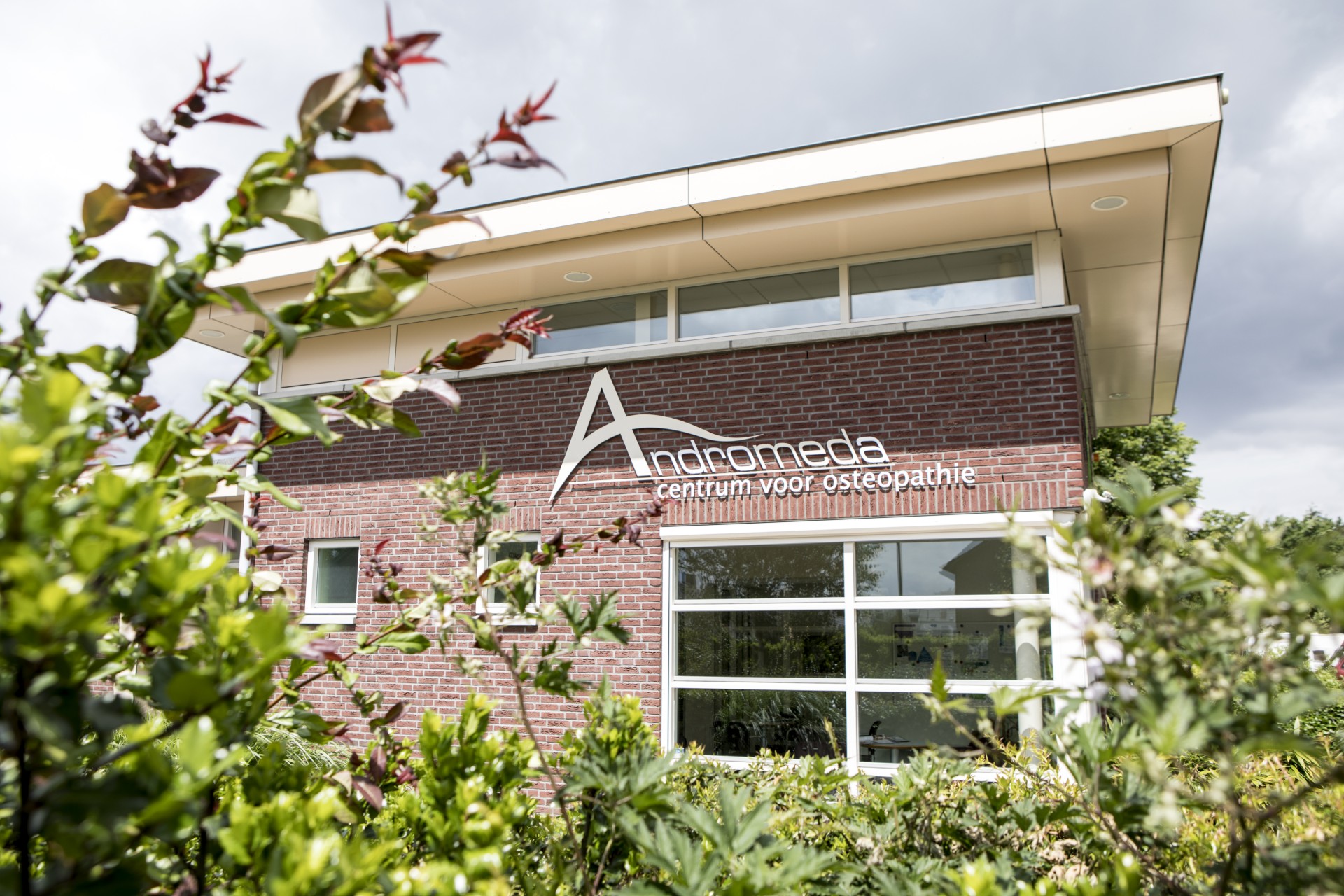
Spring 2017. I was considerably fatigued and had a ‘busy head.’ I was overworked and saw a link to, among other things, not yet being able to properly manage my high sensitivity trait. However, especially as a psychologist, where you focus more on the mental well-being of people, I find it very important to always include physical well-being in the overall picture. Naturally, this applies to myself as well. Someone recommended that I try Ton van der Heiden (see photo). Ton is an osteopath at the Andromeda Center for Osteopathy health center in Veldhoven. Ton is ‘world-famous’ in Brabant. For seven years, he has been working with an unusual research method to ‘make full use of the body’s self-healing capacity.’ With very surprising results. So, off to Veldhoven.
“by Sjoukje Pattipeiluhu, psychologist and working in her own practice for high sensitivity in Nijmegen. www.hartopweg.info
I did not mention to Ton that I was highly sensitive or sometimes overstimulated, but based on his examination/intake interview with me, the term ‘stimulus processing’ quickly came up. Ton concluded that I must have had a major fall at the ages of 3 and 11, and that brain injury had occurred as a result, causing my thalamus to malfunction. Brain injury?! Wasn’t that something associated with severe accidents and such? And how did he arrive at that so quickly? I had to admit that around the age of 3, I had tumbled down a large staircase and around the age of 11, I had indeed ended up in the hospital with a concussion after falling from a horse, but I had apparently recovered from those incidents just fine. Apparently not?
According to Ton, my thalamus, the so-called ‘secretary’ of my brain, was not doing what it was supposed to do, namely: inspecting incoming information, selecting it, and referring it to the right place. No, my thalamus welcomed everyone warmly and immediately gave them a VIP ticket to the main stand, where it subsequently became very crowded and lively…. This reminded me very much of my high sensitivity. In this trait, information is also processed very deeply by the brain and little filtering of information takes place. Could it be that I wasn’t highly sensitive at all, but was simply walking around with a bruise in my head? Or was this my high sensitivity? That actually seemed very strange to me, but well, time would have to tell. After 3 treatments with Ton, to which I reacted very strongly with severe headaches, vomiting, and fatigue, I noticed a remarkable improvement. Although I had already experienced less of the burdens of my high sensitivity in previous years as a result of exercises and insights, something had clearly changed again within a short period. I suffered even less from ‘mood swings’ and felt overstimulated less quickly, especially literally less ‘agitated’ in my body. I previously regularly suffered from a sensation of a kind of ‘wind turbine’ at the level of my throat, and this had as good as disappeared. I found that truly bizarre. Fortunately, the positive aspects of my high sensitivity, such as my creativity, enthusiasm, empathy, and perceptiveness, had not disappeared :-). Does this mean that all overstimulated highly sensitive people are actually people who fell down the stairs or off a horse? I think not. However, it could mean that if you easily suffer from overstimulation or fatigue, it is useful to check whether, in addition to your high sensitivity, an extra neurological cause (after all, high sensitivity also has a neurological aspect) might be playing a role. Apparently, seeming recovery after a fall, concussion, etc., does not always mean full internal recovery of all brain functions, according to osteopathy.
I always advise everyone who comes to my practice, Hart op weg, and has physical complaints to involve their GP or medical specialist. However, the knowledge and treatment I received through this osteopath do not yet seem to be widely known and perhaps… accepted. The unfortunate part of that can be that someone does not receive the help that might be even more appropriate. I therefore asked Ton if I could interview him about his method so that more can become known about it.
‘The silent partner who knows best’
In the autumn of 2017, I interviewed osteopath Ton van der Heiden about his method. Because, what exactly had he done with me and how does he view high sensitivity?
Ton, can you tell us something about the background of your method?
I was originally a physiotherapist and manual therapist; osteopathy followed later. After years of study, I mainly knew ‘what others told me.’ However, I, along with my colleague Peter van Dommelen, was looking for a more fundamental ‘knowing’ and we continued our studies at the Sutherland Cranial College in London, where remarkably few Dutch osteopaths study. Gradually, our respect for the body grew greater and greater, especially through the books of Rollin Becker and William Garner Sutherland, who both describe the body as ‘the silent partner, who knows best.’ All the pieces of the puzzle fell into place during an ‘Emotional Release’ course by Jean-Pierre Barral. In his view, our entire body has a memory. All events are stored in the body. ‘Only tissues know.’ Injuries can be caused by energetic traumas (mechanical or through radiation), emotional traumas (fears, grief, guilt, powerlessness, anger, etc.), or biochemical loads (by bacteria, viruses, parasites, or by exposure to, for example, lead, cadmium, zinc, or ink). This injury can be activated by a repetition of the injury or by a specific ‘reminder’: sensory perceived information that played a major role at the time the injury occurred, for example, the smell of fish in the case of food poisoning. It has proven very risky to assume that as a practitioner you can know exactly what is going on in the body. Through study and experience you can go a long way, but you never know as much as the body itself; that is why we prefer to listen to the body. “Face to face with endless consciousness, only modesty is appropriate.” I take all of this into account in my method.
You investigated the cause of my complaints using a combination of osteopathy and the ‘Touch for Health’ method. Can you tell us how this initial examination works?
The art is to extract information from the body. After all, the body carries all the information with it. As practitioners, we consciously take a step back in our examination, because the body always tells the truth, unlike the patient who sometimes consciously or unconsciously withholds information. The brain forgets a lot; the body does not. You could therefore not wish for a better conversation partner, because the body has been present for everything. Jean-Pierre Barral said that the body responds to questions that the practitioner asks in their mind. You make contact with the patient by placing your hands on the head, and the reactions to the questions you ask in your mind—inaudible to the patient—are subtle but clearly perceptible with the hands. In this way, you work through a certain sequence of yes/no questions and eventually a diagnosis emerges: a complete story, the relevant structure, and the explanation of why this structure behaves this way. In addition to finding the location of the primary lesion, you also find the year in which the primary lesion occurred. The patient can very often confirm that a significant event took place in that particular year, relevant to the development of the complaints. That is the beauty of this method. I only feel that something must have happened in a certain year, and the patient comes with their own story, with details that I could not possibly have known. Recently, a patient suggested in surprise that I might have access to his personal records at the municipality. Funny.
In high sensitivity, information from the outside is processed very deeply by the brain, which means that HSPs often experience the world intensely. How do you view this as an osteopath?
I suspect that it is not the senses that play the leading role in high sensitivity, but rather a structure located centrally in the midbrain, the thalamus. You can compare this to the secretary in a company. She also processes all information from the outside; and also from the inside. Emails, phone calls, letters. The same goes for the thalamus with information coming in via the eyes, the ears, the sensors in the musculoskeletal system, the internal organs, and the vestibular system. Subsequently, she decides whether information can be passed on at all to, for example, the optical cortex in the cerebrum. Sound can also potentially be filtered out, which is only moderately successful in people with ADD, for example. This secretary can also attach a file to the incoming email if the sender is known to the company. Similarly, the thalamus attaches certain emotions to a sound, for example. For instance, if you have been bitten by a dog once, the barking of a dog will be experienced as unpleasant by the patient, and the recipient of this stimulus will act accordingly.
How do you think highly sensitive people can be supported/helped through osteopathy?
There will undoubtedly be more approaches than mine. During my examination, I always remain open to all structures of the human body and try to gain insight into the origin of these problems again. With the confidence to be able to address them. The body will surprise me again with its resilience, provided I show that I understand it.
In my experience, you have a record low number of treatments per patient! You once mentioned that you have an average of 3.4 treatments per complaint. Why do you think this is?
I do indeed have a treatment average per problem of 3.4. I attribute this to two things. On the one hand, because the body appears to possess enormous resilience, even if the problem has existed for years, provided the focus is directed at the primary dysfunction (the main cause of the problem). And I only start a treatment once I have uncovered this primary dysfunction. On the other hand, I stop the treatment very quickly if I notice that the body’s reaction is not as I expected. Either the problem is too large (e.g., there turns out to be underlying cancer), or someone is using very heavy medication such as prednisone, or there are major continuous stress factors that the patient cannot simply change. In other words, if things go well, I am finished in 3 to 4 treatments, and if the result is disappointing, I am also finished after 2 to 3 treatments. It sounds strange, but even the latter group of patients is often satisfied because I can give them clarity on why things are going this way and which path they might still be able to take.
I noticed myself that after your treatment, my body and mind started working like crazy. You regularly called that ‘the self-healing capacity’ being set in motion. I developed all sorts of complaints, also in places that initially seemed to have nothing to do with my complaint. After a lot of headaches, nausea, and a kind of ‘attacks’ of severe fatigue, a particularly intense psychological process followed in which I even had a kind of ‘flashbacks’ of things from the past. My body and mind seemed literally busy ‘resetting’ everything. Can you tell us something about this recovery process?
If I address the primary dysfunction’s recovery capacity through my hands, the information that played a role in its origin is immediately released. A reaction with headache and nausea can therefore occur if the ‘stress’ in the base of the skull, for example, was caused by a fall from a climbing frame onto the head, resulting in a concussion.
Do you have a good tip to share with highly sensitive people?
High sensitivity can be a beautiful character trait, but it should not lead to distress. In that case, a visit to your practice or that of an osteopath could be appropriate.
Thank you, Ton!
N.B. The German psychiatrist Wolfgang Klages also stated in the 1970s that, in his view, sensitivity originates in the thalamus, where information is filtered. In addition, more and more brain research is currently taking place regarding high sensitivity.

