


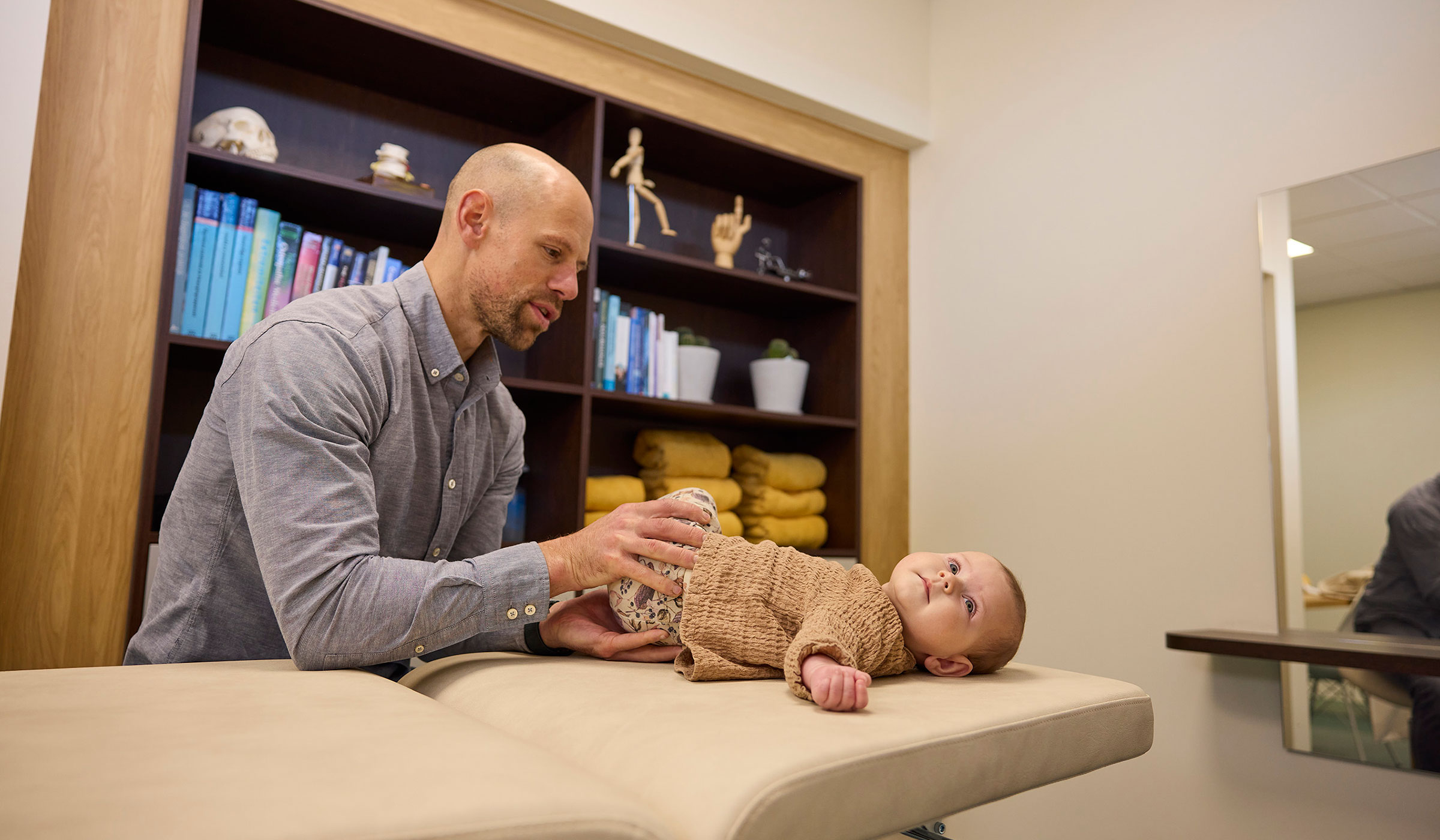
Osteopaths regularly see infants. This can involve a wide range of complaints, often as a result of the birthing process, or sometimes even originating during pregnancy. In this case, it concerned a five-week-old baby who cried a lot and was much more restless and mobile than his brother had been at that age, the parents told me during the initial intake interview. The delivery had gone well, without complications—actually easier than with their first child.
Examination revealed a preferred head position to the left and a slight asymmetry of the skull. He spat up an excessive amount of food. He often clenched his fists and squirmed restlessly with his torso. What was striking was that he primarily had these complaints when lying on his back, but hardly or not at all when lying on his stomach. The cause was found to be a limited range of motion of the first cervical vertebra and increased tension in a bone segment of the skull where an important nerve exits the head and runs to the diaphragm.
Particularly when treating babies and small children, it is essential to work subtly and with respect. Cracking, stretching, and pulling are techniques that are strictly forbidden for these young patients and will not be used by an osteopath. In this case, my treatment led to the normalization of neck and head movement, and the disappearance of the preferred position and spitting up. The slight asymmetry of the skull will normalize now that the skull is being loaded symmetrically again.

