


Can an old chest trauma disrupt the heart rate decades later?
Recently, I saw a 57-year-old woman with persistent neck and shoulder complaints on the left side. During our conversation, it emerged that she had also suffered from heart palpitations for years.
In my work as an osteopath, I always look beyond the symptom: where is the primary dysfunction located?
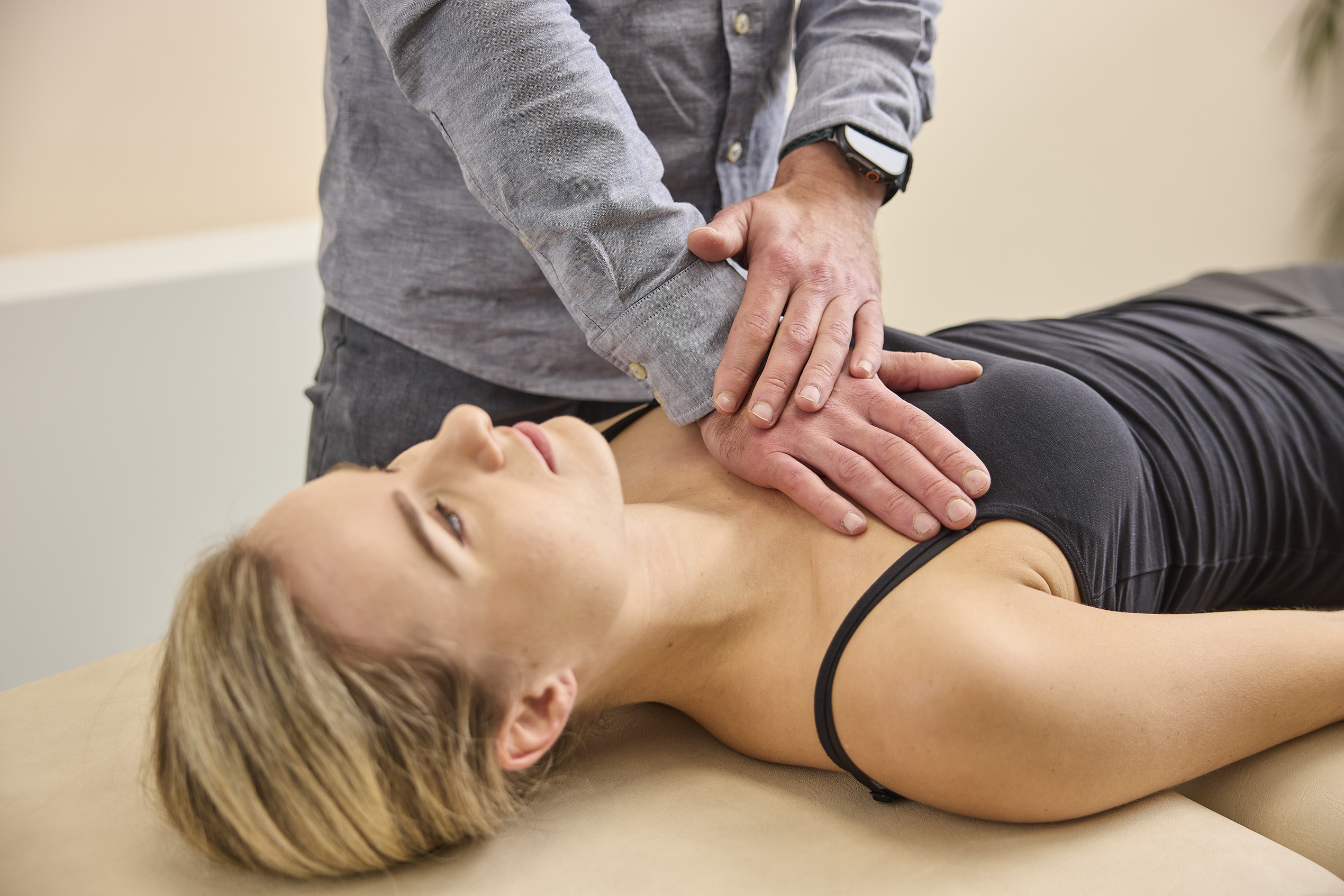
During the examination, the tension in the connective tissue behind the sternum was particularly striking. She mentioned that she had fallen hard on her upper back as a child and, years later, had suffered a bruised sternum. Such traumas can lead to increased fascial tension within the thorax.
This can manifest as heart palpitations in several ways:
Mechanically: through the endothoracic fascia and the pericardium, tension can affect the pericardial sac.
Neurovegetatively: increased tension can irritate the vagus nerve and the sympathetic trunk, thereby disrupting cardiac regulation.
After the first treatment of the fascia at the level of the sternum (balanced membranous tension technique), she initially experienced a significant increase in symptoms:
– increased shoulder pain
– a clear increase in heart palpitations
– a general sense of malaise
Within 2 to 3 weeks, however, a clear improvement followed: the shoulder pain decreased and the heart palpitations also subsided. I expect that repeating this treatment once more should be sufficient.
The fascial system can ‘remember’ old traumas for a long time and cause complaints in unexpected ways.

