


Learning from the body every day…
Recently, I saw a 13-year-old boy in my practice who had been suffering from persistent headaches for over 7 years. In addition, he had been struggling with obsessive-compulsive disorder, anger, frustration, and fatigue since that time. His parents’ question: can osteopathy help with the headaches?
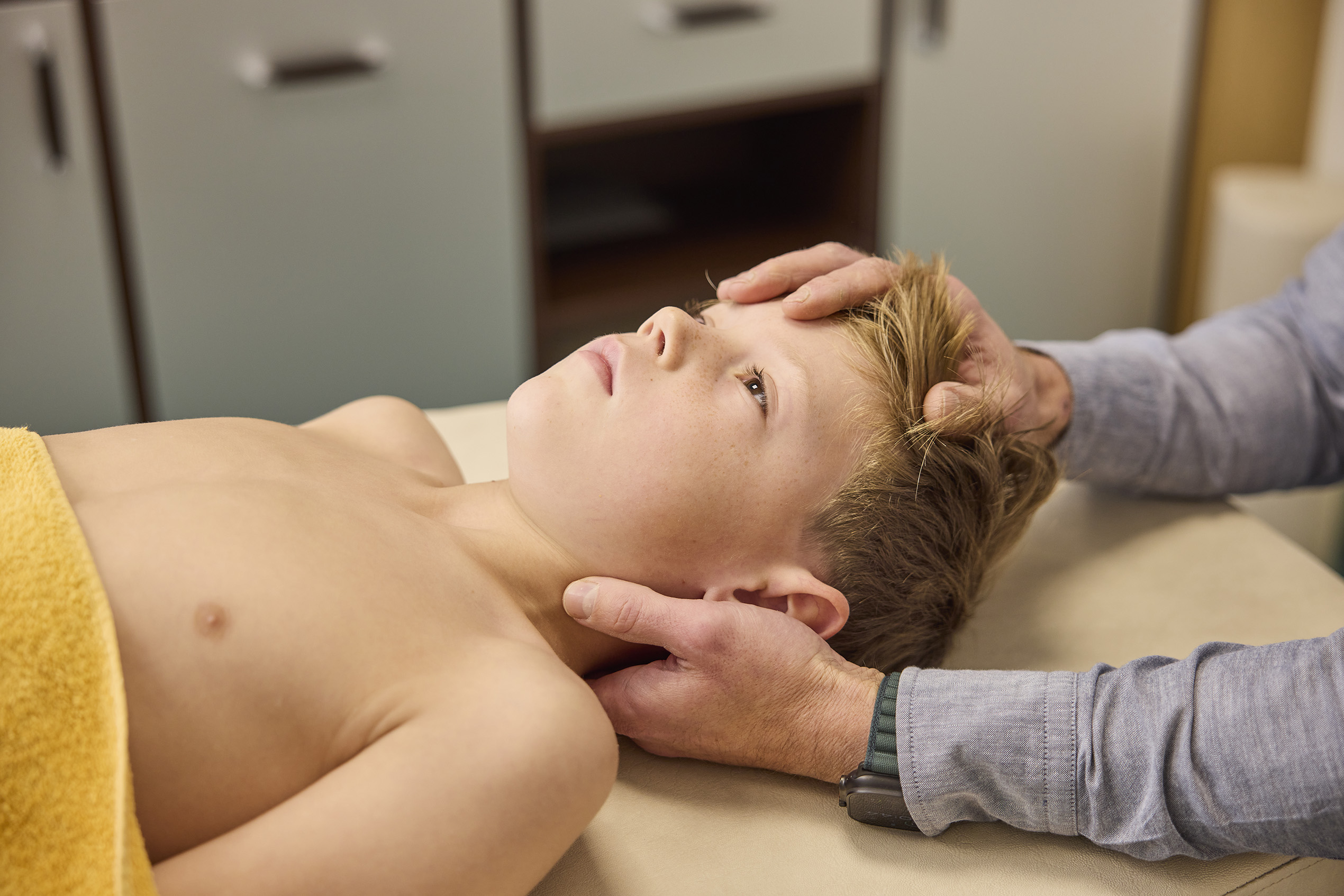
In my examination, I always look for the structure with the greatest loss of movement—the so-called primary dysfunction. In his case, the focus was on the outer meninges, the dura mater, particularly at the front of the head. This led me to suspect that a significant head injury had occurred in the past. Upon further inquiry, this proved to be correct: at the age of five, he suffered a hard blow to his forehead against a metal object, caused by someone else. The fact that the injury was “the fault” of someone else added an emotional layer to the situation.
The treatment—using a gentle Balanced Membranous Tension (BMT) technique—focused on optimizing the tension of the dura mater. The reaction was striking: in the first three days following the first two treatments, both the headaches and the compulsive symptoms temporarily increased significantly, only to improve greatly thereafter. We observed a clear decrease in headaches as well as a reduction in compulsive symptoms.
The cerebral cortex may also play a role. It is responsible for functions such as thinking, planning, decision-making, and behavioral control—processes that are specifically disrupted in obsessive-compulsive disorder (OCD). The frontal brain regions are particularly involved in this. My hypothesis: the connection could lie in the mechanical impact of the injury, combined with the emotional weight.
My expectation is that osteopathy will provide a lasting improvement in the headaches over the long term. And if the obsessive-compulsive disorder further diminishes as a result, that would be a wonderful additional benefit!

