


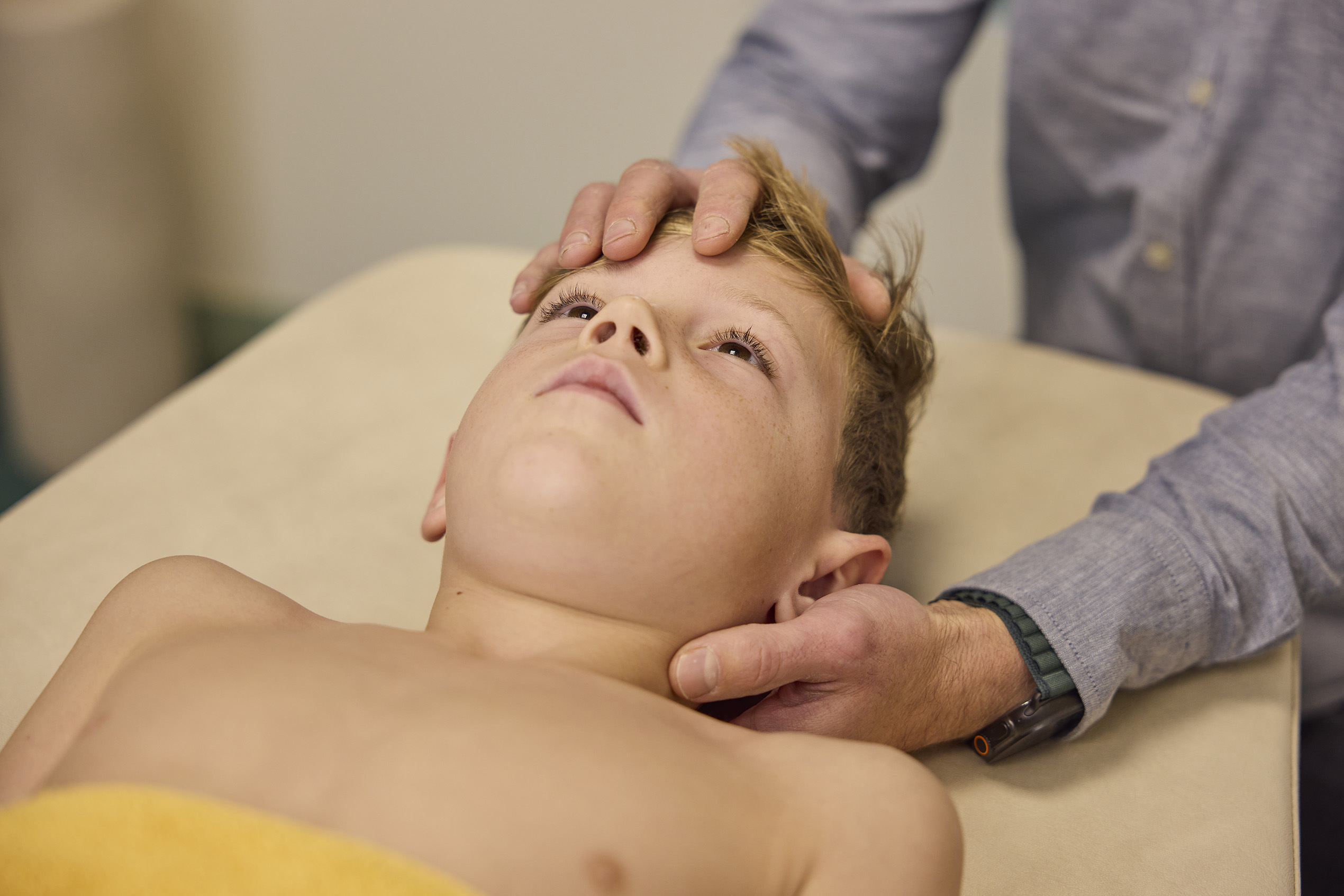
Naturally, we regularly see patients returning to the practice. Often, the reason for a return visit is that someone believes an old complaint has resurfaced. Because they have had positive experiences with our approach — often achieving rapid results after years of persistent symptoms — they prefer not to wait too long this time.
Sometimes there is indeed a relapse. A complaint can flare up again due to, for example, a fall, illness, or other physical strain. However, sometimes it turns out that something entirely different is going on. This is precisely what makes a visit to the osteopath interesting: each time, the body must be examined anew with a fresh and open perspective.
For instance, on December 22, I saw a 14-year-old boy return to the practice. Two and a half years earlier, I had treated him for migraine complaints. At that time, one of the meninges seemed to play a significant role. This region had likely become strained due to a head injury at the age of six. The boy explained then that he had been launched from a trampoline, resulting in, among other things, a broken arm.
After three treatments, the migraine attacks disappeared completely.
Last December, he visited again because he had experienced another attack. At first glance, it appeared to be the same complaint.
However, the examination revealed something different this time. Once again, a structure in the head seemed to be involved, but now it concerned a part of the brainstem. An old head injury possibly played a role here as well, this time occurring at the age of four.
His father recounted that at the time, around the Sinterklaas holiday, he had stood on a large toy fire truck he had just received. He fell awkwardly, hitting his chin on a glass coffee table. The wound bled profusely and later required stitches at the hospital.
These types of situations demonstrate that a complaint does not always have the same cause, even when the symptoms are very similar.
Therefore, within osteopathy, it remains essential to examine every patient again with an open and fresh perspective — without automatically relying on previous findings.

