Common complaints in babies
Many parents seek help from an osteopath when their baby shows symptoms that are difficult to explain.
Crying baby and sleep problems
Your baby cries a lot, is inconsolable, or sleeps poorly. This can be related to tension in the body, for example after a difficult pregnancy, a heavy delivery, or due to stimuli that are still difficult to process.
Reflux and spitting up
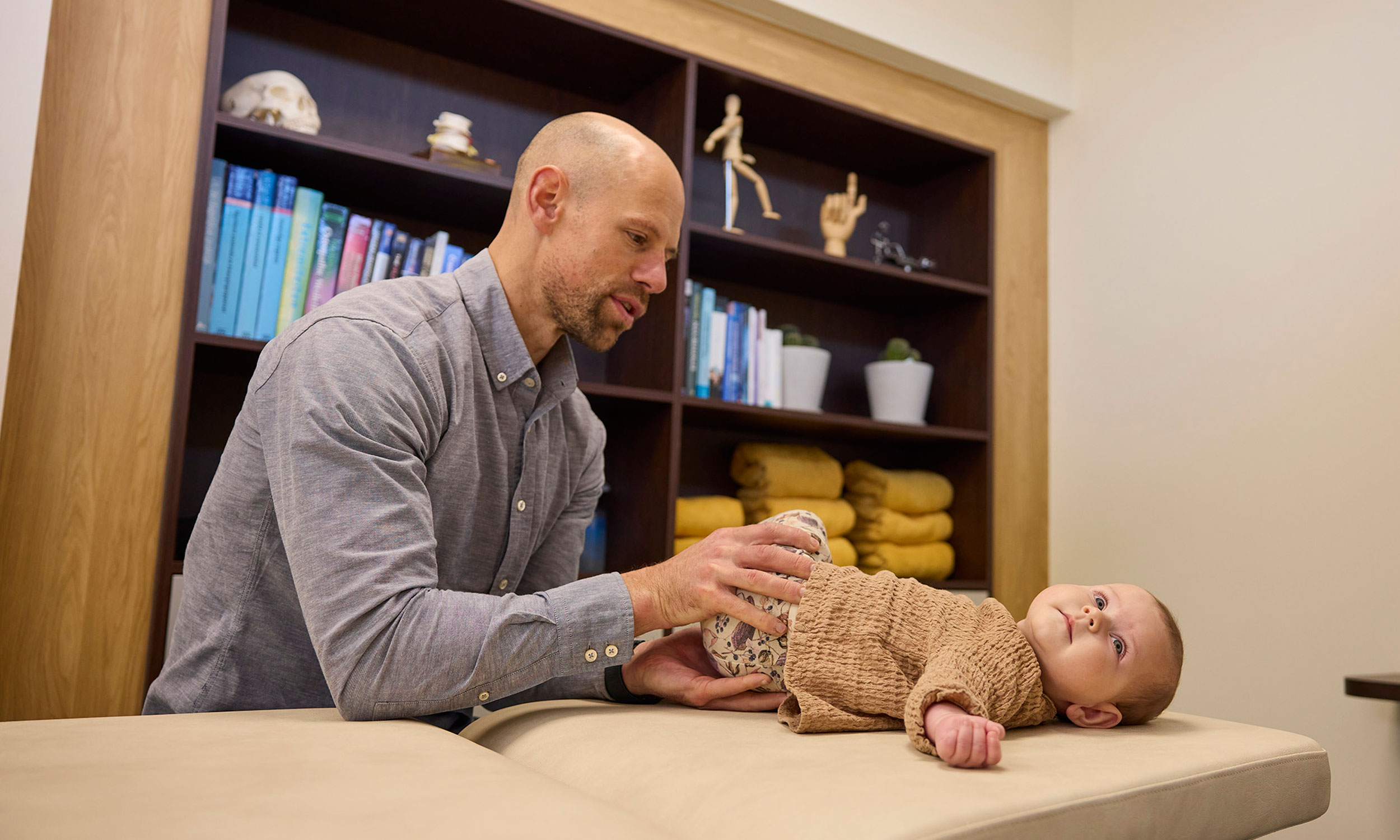
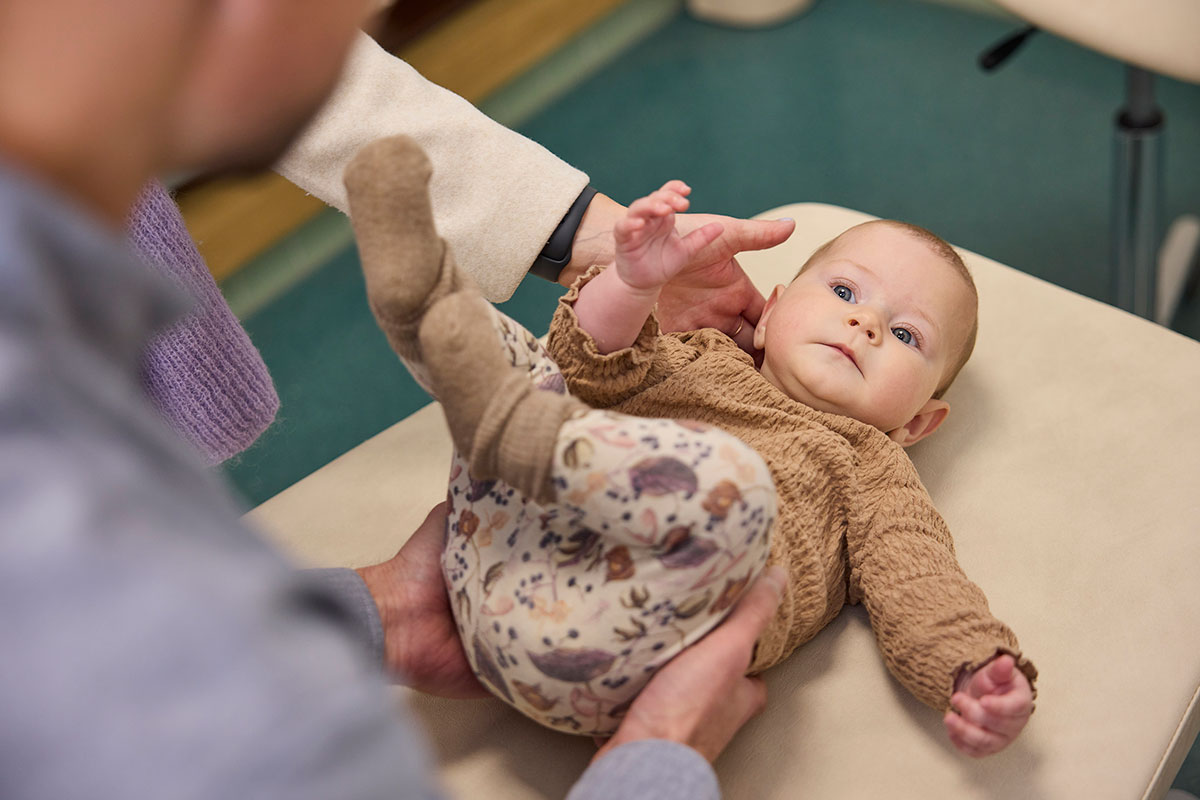
Reflux is a normal physiological process. In babies, the clearing mechanism is not yet fully developed. With reflux, food comes back up from the stomach. This can cause irritation of the esophagus and restlessness in your baby. The cause may lie, among other things, in the functioning of the diaphragm, the stomach, or the nerves that control these structures. The osteopath examines your baby and assesses whether osteopathy is of added value. Every situation and complaint is unique. Therefore, the treatment is always tailored to what your baby needs.
Colic and constipation
A baby’s digestive system is still developing. This can lead to cramps, a bloated abdomen, or problems with bowel movements. This is a normal physiological mechanism. However, some babies suffer much more from colic. Osteopathy focuses on identifying possible issues that influence this.
Preferred posture and tension
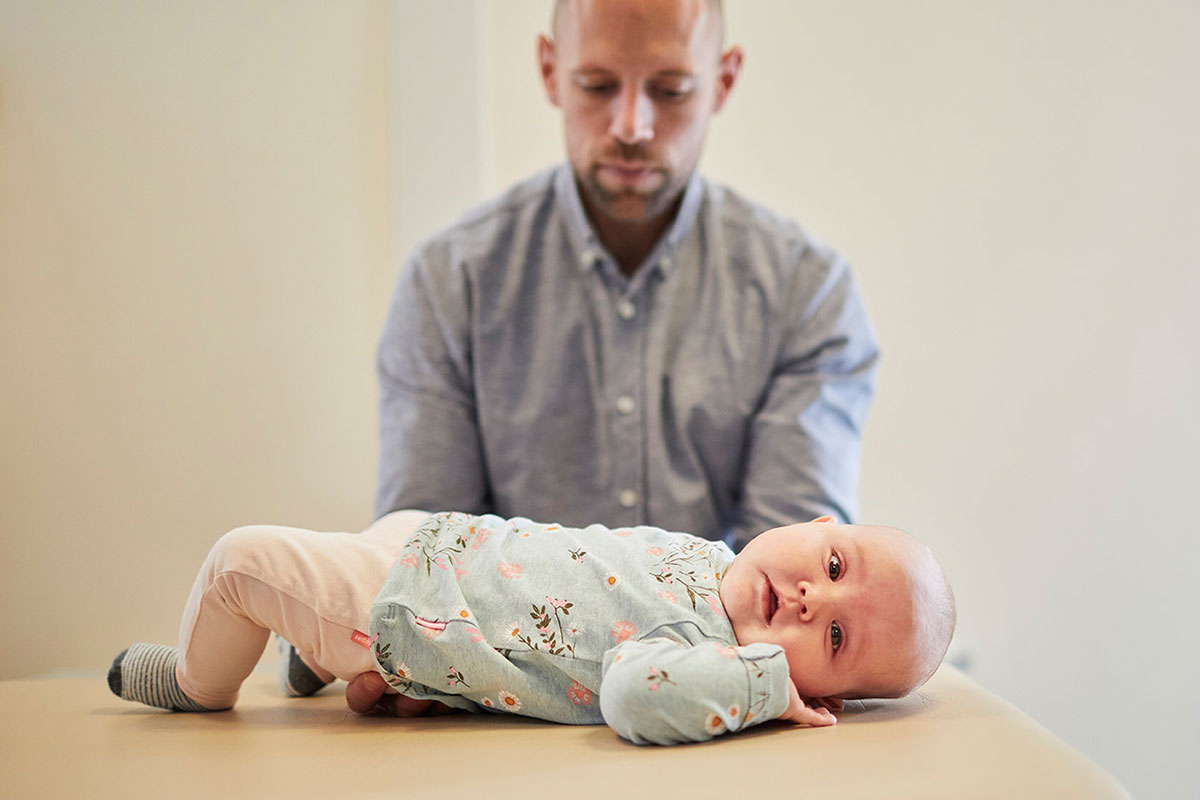
Some babies often turn their head to the same side, causing them to develop a flattened skull. This can arise from increased tension in the neck, spine, skull, pelvis, or hips, among other things.
When a baby lies in the same position for a long time, increased pressure can occur on one side of the back of the head, causing the skull to flatten and grow less round.
Even development of the skull is important because the brain grows rapidly in the first year of life. A flattened skull can affect the mobility of cranial structures and thus the development of the nervous system. This can ultimately influence the development of motor skills, sensory processing, and the overall well-being of the child.
Early detection and treatment can help reduce tension, improve freedom of movement, and support the natural development of the head and nervous system.
Recurrent ear infections
With repeated ear problems, there may be reduced drainage or tension in the area around the ear. An osteopath examines whether there are functional restrictions contributing to this.