What happens in the body during pregnancy?
Major physical and hormonal changes take place during pregnancy. These affect almost all structures in the body, especially if there are underlying issues—for example, a previous fall on the tailbone or a breath-taking fall resulting in excessive tension at the level of the diaphragm.
Changes in the pelvis and posture
Under the influence of hormones such as relaxin, the pelvis becomes more flexible to make childbirth possible. However, this also has consequences for the stability of the body. Additionally, the center of gravity shifts during pregnancy, causing you to automatically stand, walk, and move differently.
Normally, the body can adapt well to these changes. However, when there is an underlying restriction of movement or a functional disorder in a connective tissue structure, it can cause complaints. Especially during pregnancy, when the body undergoes major changes, these restrictions can lead to problems more quickly.
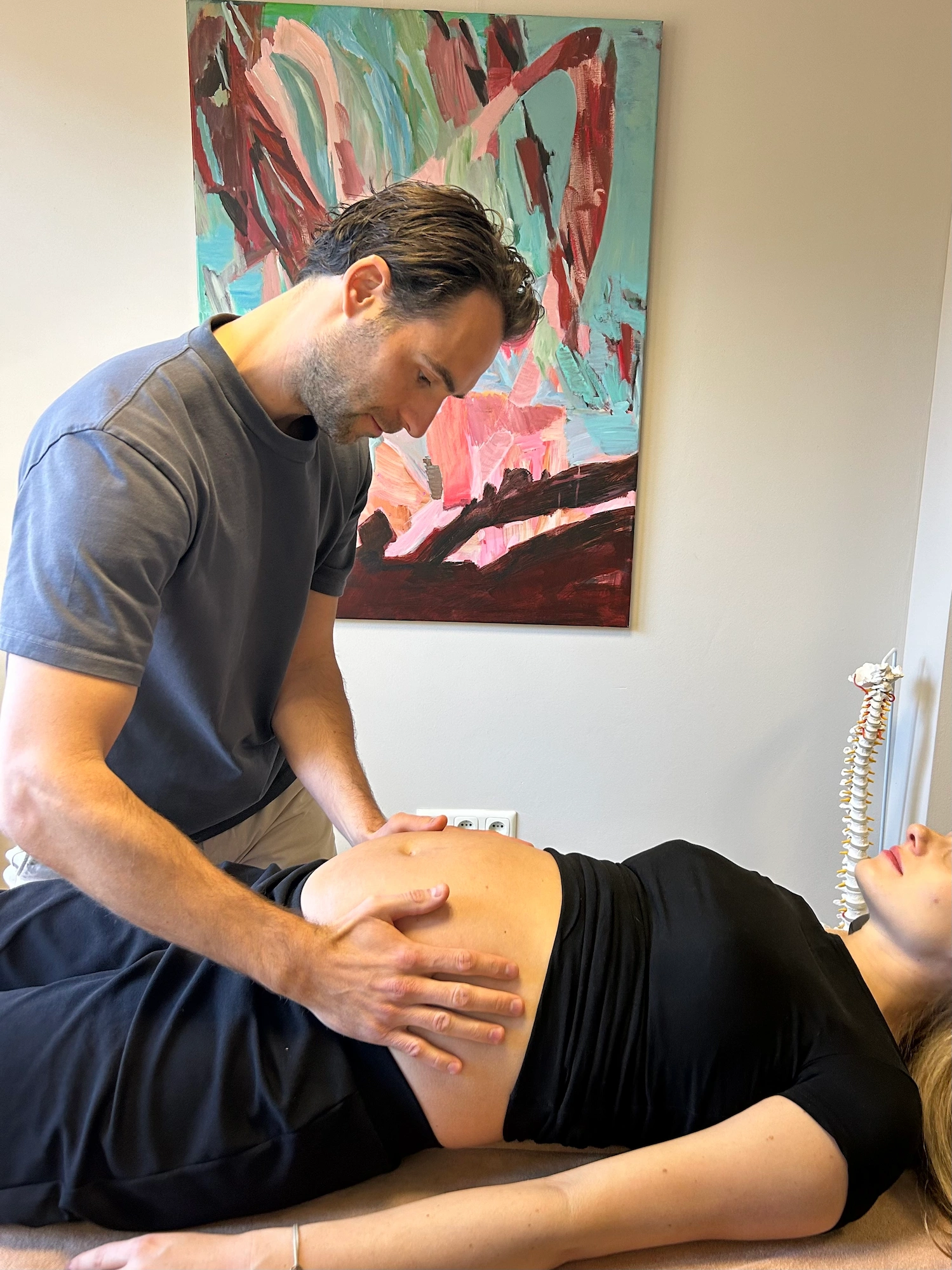
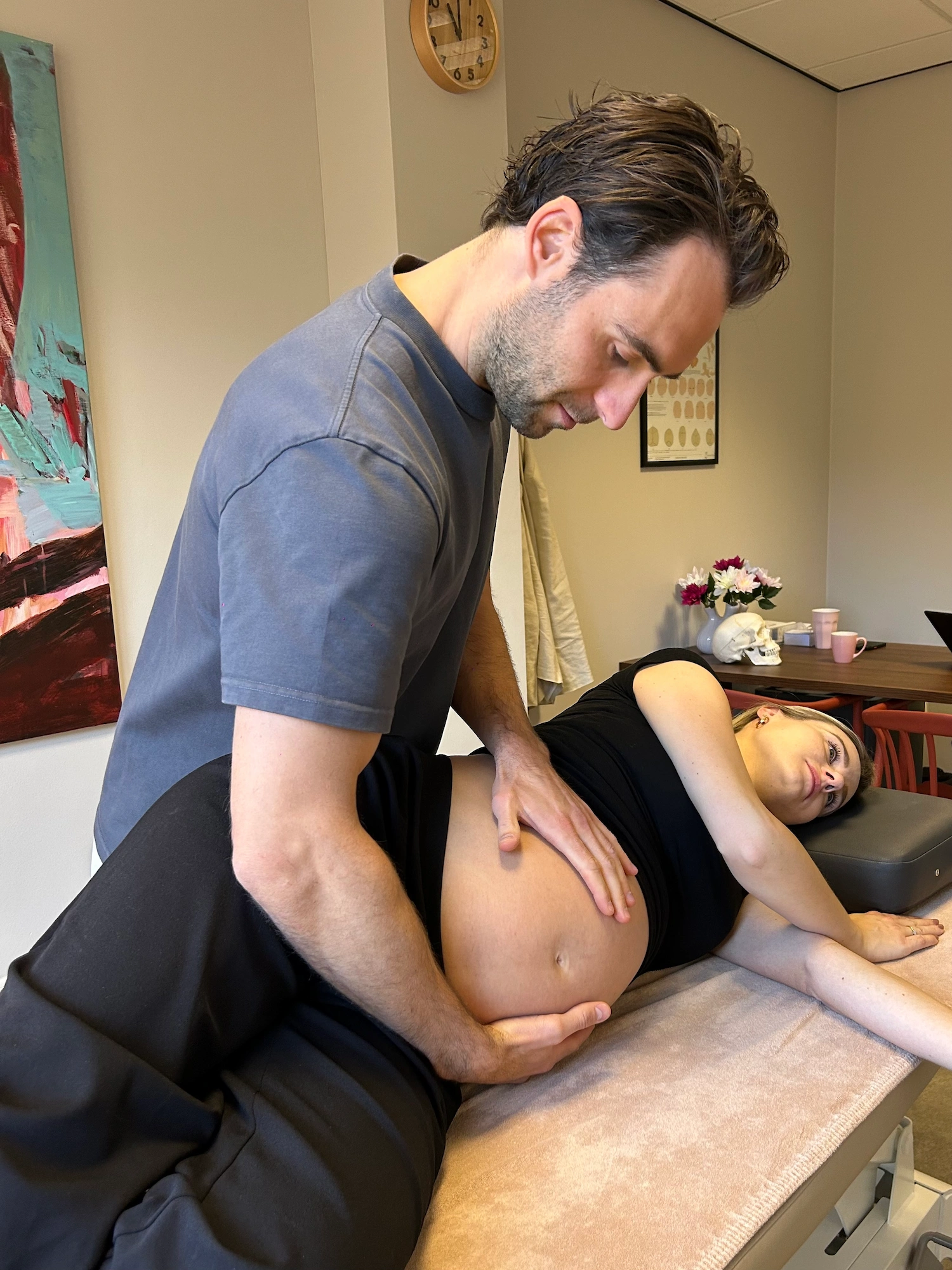
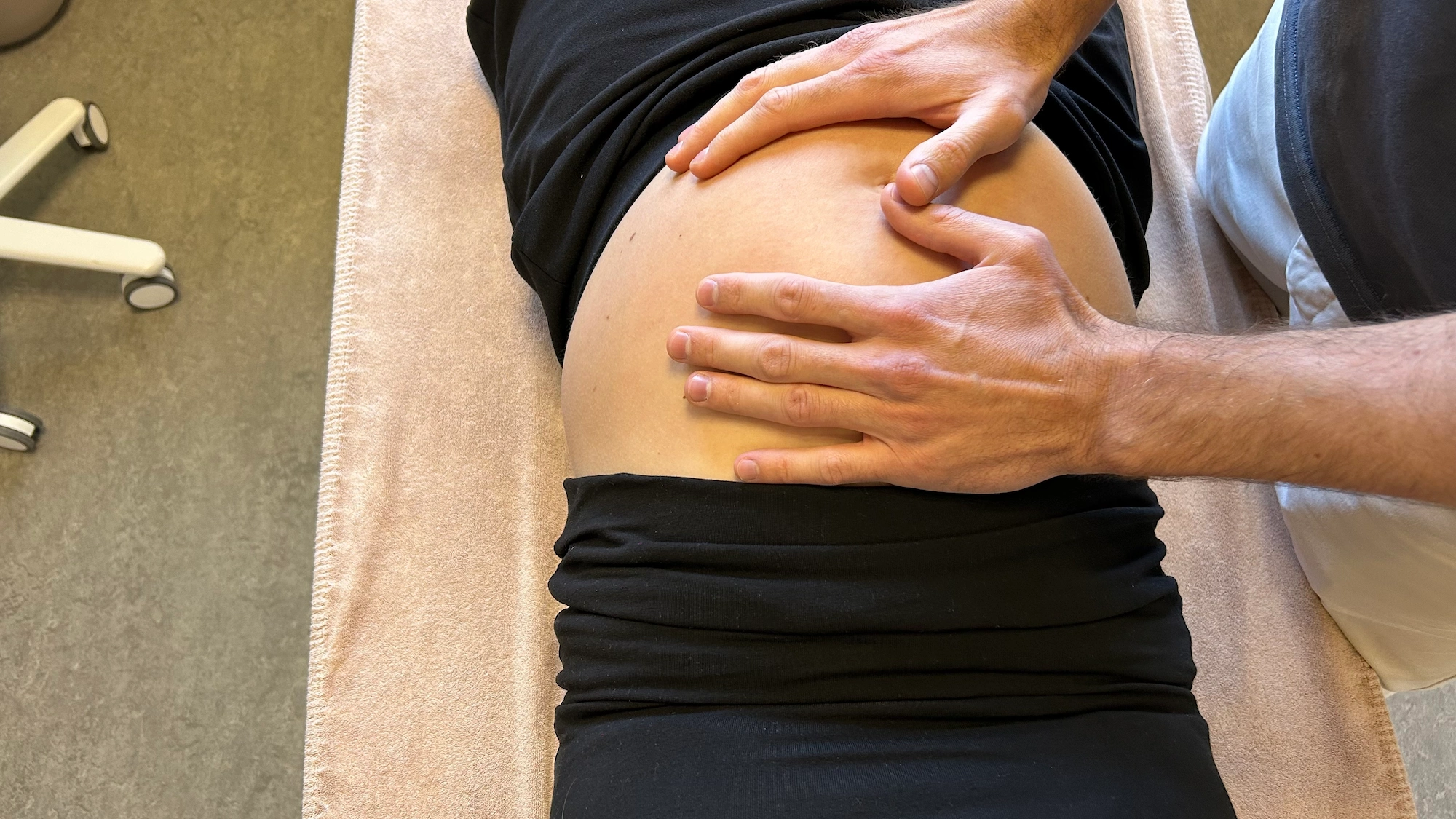
Osteopathy can help improve the mobility of tissues and joints and allow the body to adapt better to these changes. This can contribute to reducing complaints and supporting the most comfortable pregnancy possible.
Common complaints during pregnancy
Pregnancy complaints often arise from a combination of hormonal changes, mechanical stress, and reduced mobility of tissues.
Common complaints include:
- Pelvic pain and pelvic instability
- Back and neck complaints
- Headache
- Nausea and stomach complaints (such as acid reflux)
- Tailbone complaints
- Tingling in arms or legs
- Restless legs
- Recurrent bladder infections
From an osteopathic perspective, the cause of these complaints is often not located where the pain is experienced. It is precisely this interconnectedness that makes osteopathy distinctive.