Osteopathy for a hernia

A hernia can have a significant impact on your daily life. Lower back pain, radiating pain to the leg, reduced sensation, or loss of strength can make movement less natural. A hernia never develops without reason. Therefore, it is important to identify the underlying cause of the hernia. For this reason, many people often visit an osteopath to gain more insight into their complaints and the possible cause.

At Andromeda Center for Osteopathy, we look beyond just the location where the pain is present. A hernia often does not arise from a single cause. The load on the spinal column, lifestyle, but often also a previous fall or trauma can influence the way the body moves and thus affect the development of complaints associated with a hernia.

For more than 20 years, Marc van Leeuwen and Sten Bierens have been helping people with diverse complaints of the musculoskeletal system. Personal examination, attention, and tailor-made treatment are central to this approach.
Make an appointment

What is a hernia?

A hernia is a protrusion of an intervertebral disc. Between the vertebrae of the spinal column are discs that function as shock absorbers. This intervertebral disc consists of a sturdy outer ring containing a soft core. When the outer ring becomes weakened, part of the core can press outward. This creates a protrusion that can put pressure on a nerve. This is called a hernia with nerve compression. The most common form is a hernia in the lower back. In that case, pressure on the nerve can cause complaints that radiate to the leg. The severity of the complaints varies per case. Some people primarily experience back pain, while others suffer from radiating pain, sensory changes, or loss of strength.

Common symptoms of a hernia

Various symptoms can occur with a hernia:

  • Lower back pain
  • Radiating pain to the leg
  • Tingling in the foot or leg
  • Reduced sensation
  • Reduced strength
  • Reduced or diminished reflexes
  • Pain when coughing or sneezing
  • Stiffness in the back
  • Limited movement
  • Tension in muscles around the back and pelvis

Not everyone with a hernia experiences the same symptoms. The location of the protrusion and the degree of pressure on a nerve play an important role in this.

How common is a hernia?

A hernia occurs regularly in adults between the ages of 30 and 60. Especially people who strain their backs for long periods, perform heavy physical work, or sit for long durations have an increased risk of complaints. Yet a hernia does not arise exclusively from physical strain. Stress does not cause a hernia, but it can influence muscle tension, pain perception, and recovery.

With which complaints can osteopathy help?

A hernia usually develops gradually. Often, there is no single clear cause to be identified. Various factors can together lead to an increased load on the intervertebral disc.

Physical causes

The intervertebral disc absorbs large forces daily and plays an important role in the mobility and stability of the spinal column. When the load on the spinal column is greater than the body’s load-bearing capacity for a longer period, changes in the intervertebral disc can occur. The outer fibrous ring can become more vulnerable, allowing the gel-like core to bulge outward or, in some cases, a hernia to develop.

In addition to natural age-related changes, factors such as one-sided strain, prolonged postures, reduced mobility, and a reduced load-bearing capacity of the body can contribute to the development of a hernia. From an osteopathic perspective, we often do not see a hernia as an isolated problem, but as the end result of a long-term disruption of the balance within the body.

For example, increased baseline tension of the diaphragm, reduced mobility of the abdominal and pelvic region, and restrictions in other parts of the body can influence pressure distribution and local load on the lower back. As a result, the intervertebral disc can be subjected to increased mechanical load over a longer period, which can contribute to the development and persistence of complaints.

In osteopathy, we therefore look further than just the location of the hernia. We examine the entire body to map out possible tension fields and movement restrictions, with the goal of supporting the body’s load-bearing capacity and improving natural freedom of movement.

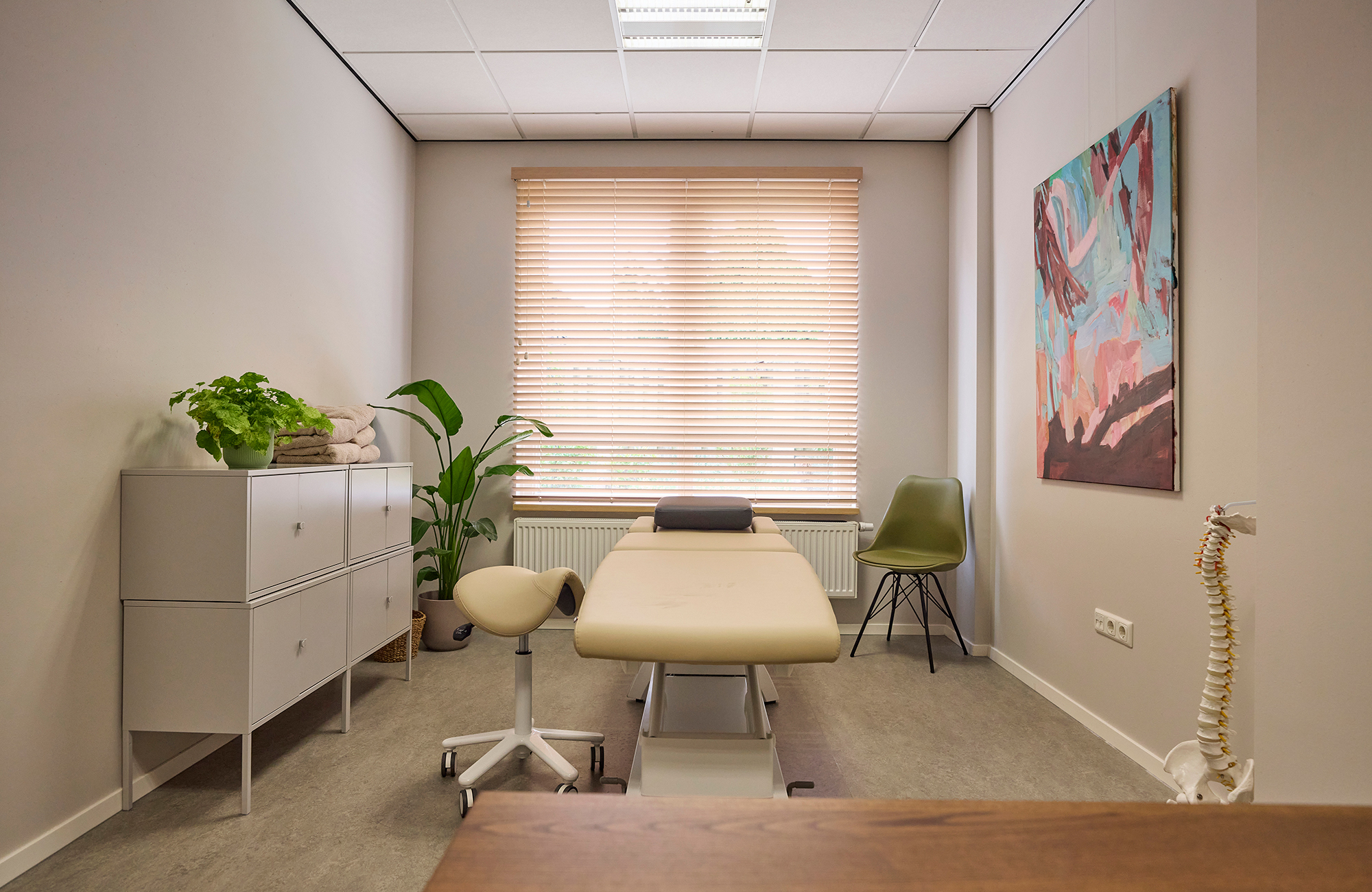
Behandelkamer van Andromeda Osteopathie in Valkenswaard.

What can you expect during a first visit?

During the first consultation, the osteopath takes ample time for you and your child. Questions are asked not only about the current complaint but also about the pregnancy, birth, medical history, and lifestyle habits. This information provides insight into the foundation of your child’s body and into factors that can influence the posture, growth, and overall well-being. This is followed by a careful physical examination, during which the osteopath examines how your child’s body moves and functions.

During the examination and treatment, your child’s comfort is central. We pay great attention to creating peace and trust, as this has a positive influence on the course of the treatment. You are always present. For babies, you may, for example, use a pacifier, toys, a stuffed animal, or a cloth. You can reassure older children beforehand by explaining that the osteopath is examining the body to assess posture and mobility, and that this does not hurt.

What does the osteopath examine in the case of a hernia?

Extensive intake

During the first appointment, there is an extensive discussion about when the complaints started. Previous injuries, surgeries, workload, sports activities, and general health are also addressed.

In addition, the osteopath asks about the nature of the pain, the radiating pain to the leg, and any changes in strength or sensation.

Physical examination

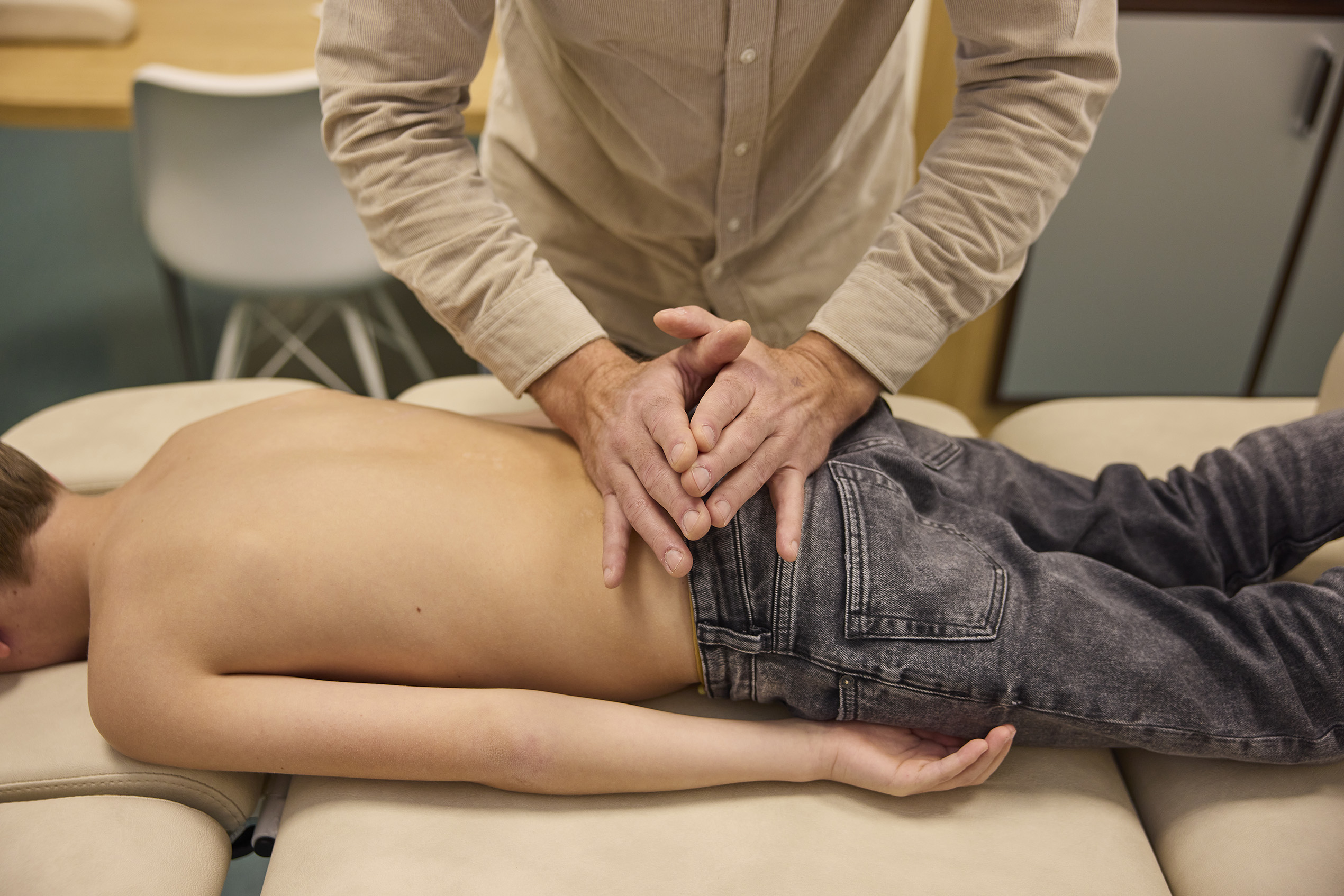
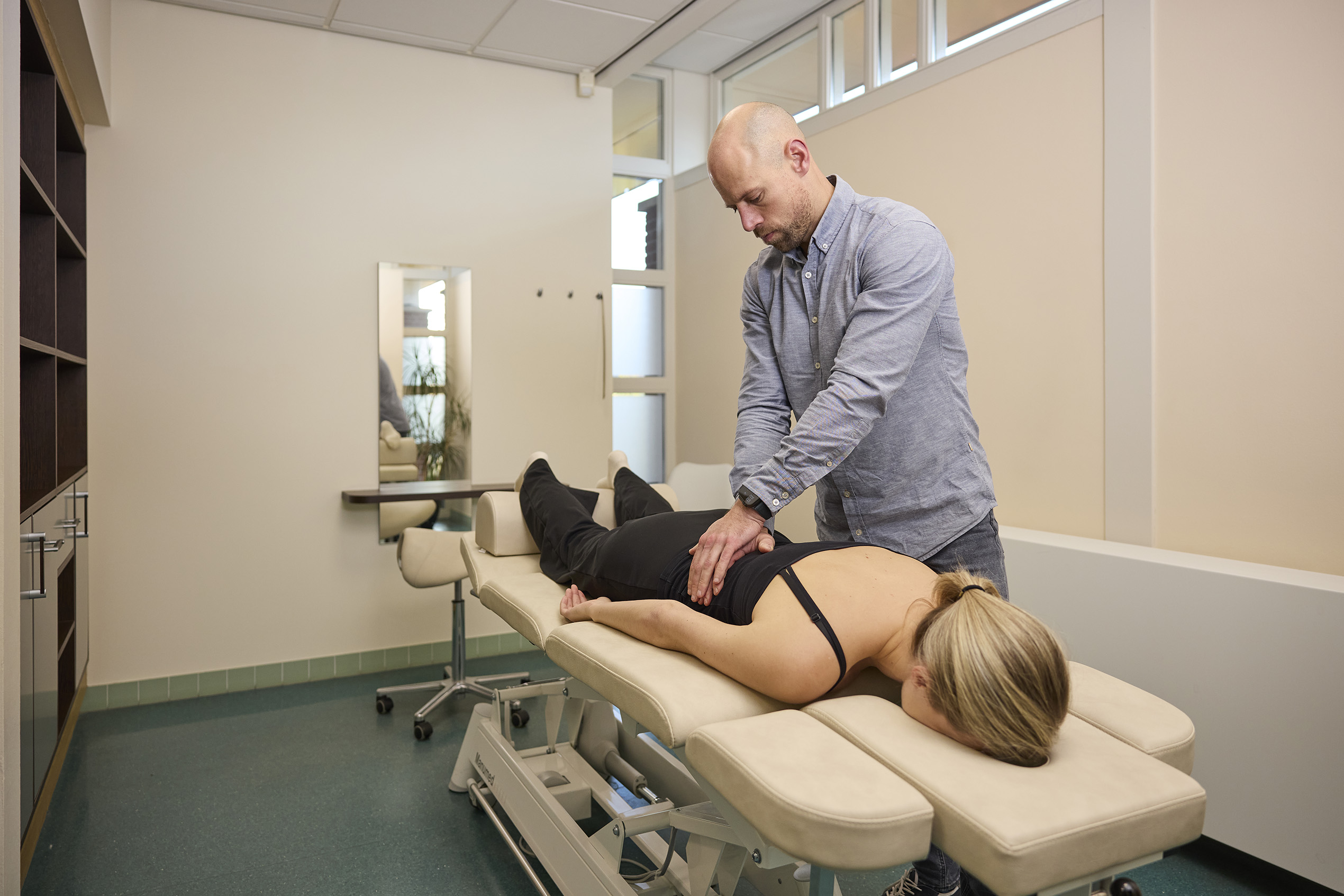
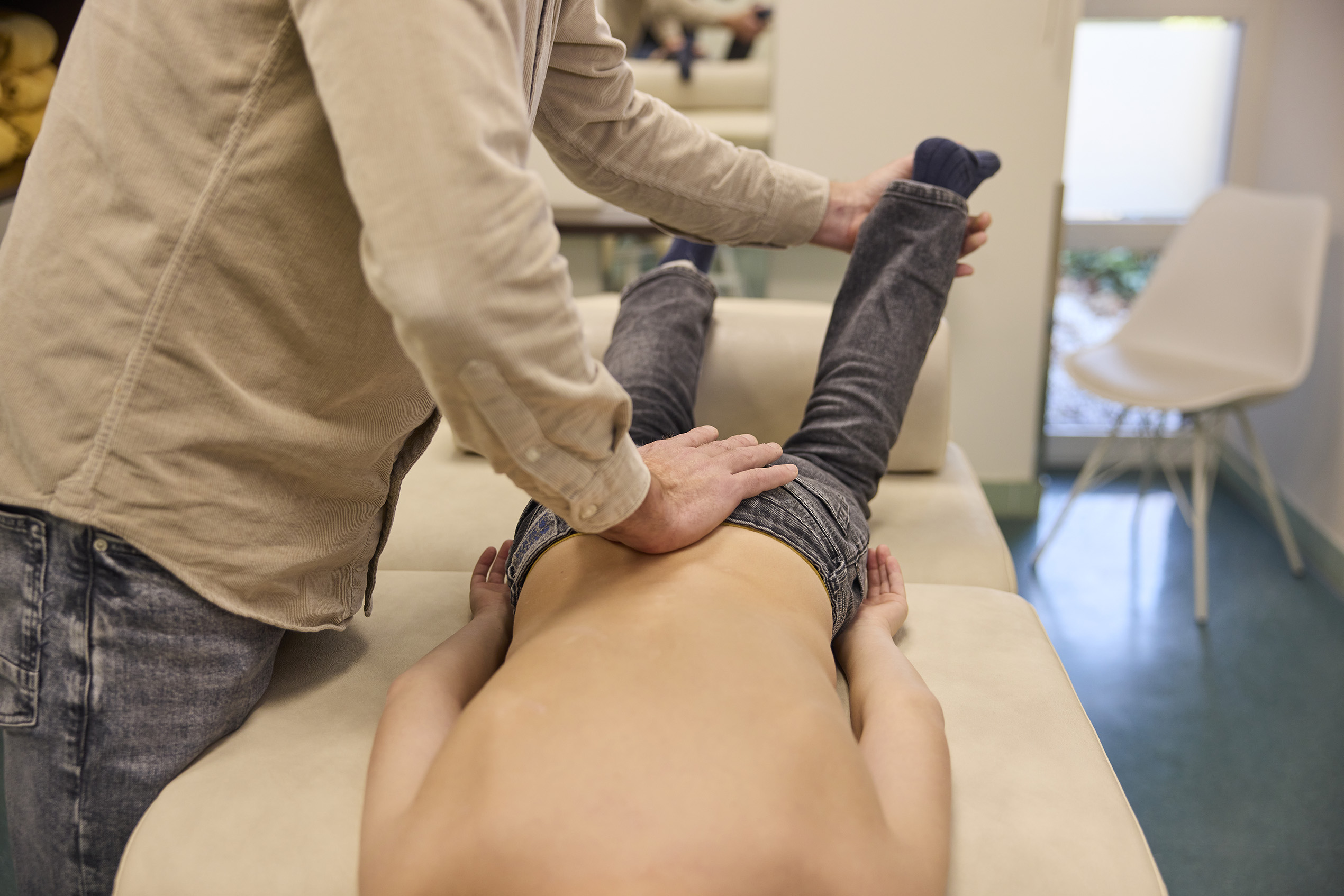
The intake is followed by an extensive examination of the body. This looks at the mobility of the spinal column, the pelvis, the hips, and surrounding structures.

The tension of muscles, the movement of joints, and the general function of the body are also assessed. This also includes an examination of the (central) nervous system, the organs, and surrounding connective tissue.

Investigation of underlying factors

A hernia often does not arise from a single factor. Therefore, the osteopath also investigates factors that may contribute to the persistence of the complaints.

These may include:

  • Reduced movement of the pelvis
  • Increased muscle tension
  • Residual complaints after surgery
  • Old injuries
  • Long-term stress
  • Disrupted load on the back
  • Reduced function of surrounding structures

Based on all findings, it is determined which treatment best suits your situation.

Why choose Andromeda Center for Osteopathy for treatment?

At Andromeda Center for Osteopathy, personal attention is central. For more than 20 years, we have been guiding people with diverse physical complaints from a holistic perspective.

Marc van Leeuwen and Sten Bierens take extensive time for examination and listen carefully to your story. Subsequently, they look at which factors influence your complaint and which treatment is appropriate.

With practice locations in Veldhoven, Valkenswaard, and Bergeijk, we offer expert osteopathy close to home. Thanks to our personal approach, you do not receive a standard treatment, but a trajectory that aligns with your body and your recovery process.

About ACO

Make an appointment at Andromeda Center for Osteopathy

Are you suffering from a hernia, recurring back pain, radiating pain to the leg, or restrictions during movement? Then an examination by a hernia osteopath can provide more clarity about the cause of your complaints.

At Andromeda Center for Osteopathy, we take the time to carefully map out your situation. Based on an extensive examination, we look at which treatment best suits your body and recovery process. Contact us for more information or schedule an appointment directly at our practice in Veldhoven, Bergeijk, or Valkenswaard.

Contact us

Frequently asked questions about hernia and osteopathy

An osteopath investigates which factors contribute to your complaints. This involves looking at the function of the spinal column, the pelvis, the muscles, and other structures that can influence the load on the body.

Osteopathy is not aimed at curing the hernia itself. However, an osteopath can investigate which factors may contribute to the complaints and support the body in the recovery process. In other words, the osteopath optimizes the body’s self-healing capacity, which helps the hernia recover.

No. In many cases, a conservative approach is chosen first. Surgery may only be necessary in cases of severe neurological deficit or specific medical indications.

When a protrusion of the intervertebral disc puts pressure on a nerve, complaints can arise that radiate to the leg. This can be accompanied by pain, tingling, or altered sensation.

Do you suffer from long-term back pain, radiating pain to the leg, or restrictions during movement? Then an osteopathic examination can provide more insight into the possible cause of your complaints.

Physiotherapy often focuses on specific muscles, joints, and exercises. Osteopathy also looks at the interrelationship between different systems within the body and investigates possible underlying factors. Osteopathy is strongly focused on the cause of complaints and optimizes the body’s self-healing capacity.

"A natural perspective in experienced hands"

Location Veldhoven

Andromeda 4
5505 RM Veldhoven

Location Bergeijk

Meienshovel 9
Bergeijk

Location Valkenswaard

Waalreseweg 1a
5554 HA Valkenswaard

© 2026 Andromeda Osteopathie

Website by Bloomming