


Some athletes remain virtually injury-free for years, while others repeatedly struggle with muscle or tendon injuries.
And this is despite considerable attention being paid to strength, load tolerance, mobility, recovery, targeted exercise therapy and lifestyle. Often under the guidance of highly experienced specialists.
Coincidence? Or could there be contributing factors that have so far gone unnoticed?
Could a previous concussion potentially play a role in recurrent hamstring injuries? Or could a forceful blow to the abdomen, leaving an athlete struggling to catch their breath, be relevant to a persistent groin or Achilles tendon injury?
My clinical experience has taught me to look beyond a restricted vertebra or rib when dealing with persistent or recurrent sports injuries. In my practice, I therefore pay particular attention to deeper connective tissue structures and their potential relationship with circulation, including lymphatic flow. I also examine the fascial structures surrounding internal organs and pay attention to the central nervous system.
There is no standard protocol or one-size-fits-all solution within my osteopathic approach. Every athlete and every injury history requires an individual assessment.
In my clinical experience, the most significant restriction in mobility, what we refer to in osteopathy as the primary dysfunction, is often located somewhere entirely different from where the athlete experiences their symptoms.
A previous impact to the head or sternum, tension around the diaphragm, or restrictions in the connective tissue surrounding the kidney may provide important clues during my assessment.
And this is precisely the value that osteopathy has brought me, and continues to bring me: learning to listen to the body.
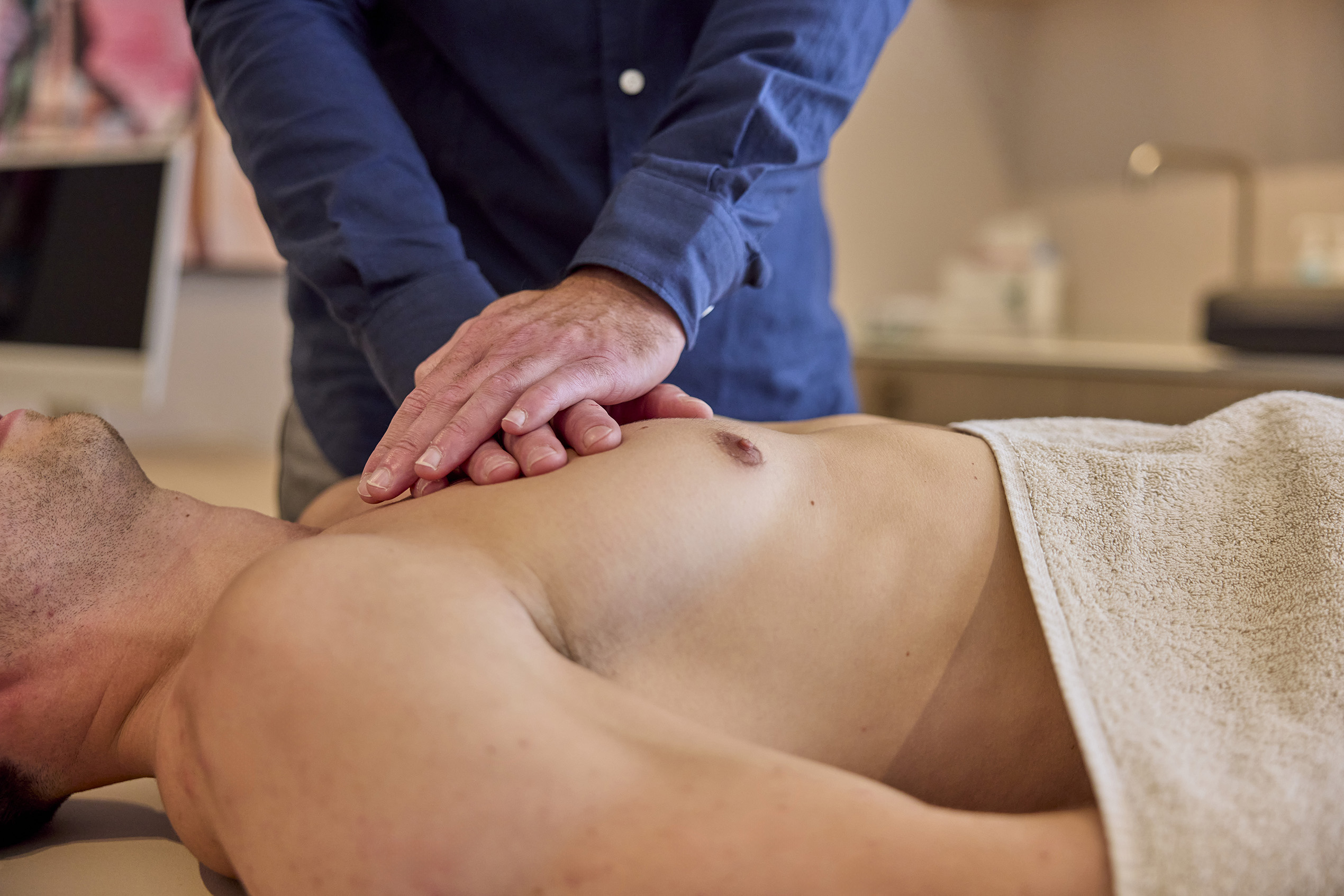
The osteopathic touch: carefully and attentively exploring what you perceive through your hands, looking beyond the site of the symptoms and searching for possible connections.
And the truth is, I am still learning from the body every single day. The responses following treatment, but particularly the subsequent course of recovery, provide me with valuable information. They help me critically evaluate whether I am on the right track with my approach.
My advice? Consider consulting an osteopath when recovery from a sports injury is not progressing as expected, or when injuries continue to recur despite previous treatment. Sometimes, a different perspective on the body can offer new insights.
Would you like to learn more about our approach to persistent and recurrent sports injuries?
Feel free to get in touch and explore the ‘Stories from Our Practice’ section on our website.

