The cause of ankle complaints varies per person. Sometimes the complaint arises immediately after an injury. In other cases, multiple factors play a role simultaneously.
Physical causes such as a sprain
There are various physical causes that can lead to ankle complaints:
- Ankle sprain
- Sprain of the ankle joint
- Tear of a ligament or tendon
- Inflammation of a tendon
- Bursitis
- Wear and tear of the joint
- Stress fracture
- Tarsal tunnel syndrome
- Nerve entrapment
- Instability of the ankle
- Residual complaints after an injury
- Reduced stability of muscles and ligaments
When damage occurs to the structures around the ankle, it can affect the movement and load of the entire body.
Posture and movement
The way you move has a significant impact on the load on the ankle. An abnormal walking pattern, prolonged standing during work, or intensive sports load can cause complaints to arise or persist.
Reduced strength of the tibial muscle, an abnormal foot position, or limited mobility of surrounding joints can also contribute to ankle pain.
Stress and tension
Stress is often not directly linked to ankle complaints. However, long-term tension can affect the body’s ability to recover.
When muscles are constantly under tension, the way a person moves often changes. This can create extra load on joints, tendons, and muscles around the ankle.
Old injuries or surgeries
Many people who come to our practice have had a previous ankle injury. An old sprain sometimes seems fully recovered but can still affect the stability of the ankle joint.
Scar tissue after surgery can also cause loss of movement. This can lead the body to develop compensations that cause new complaints over time.
The cause is not always at the site of the complaint
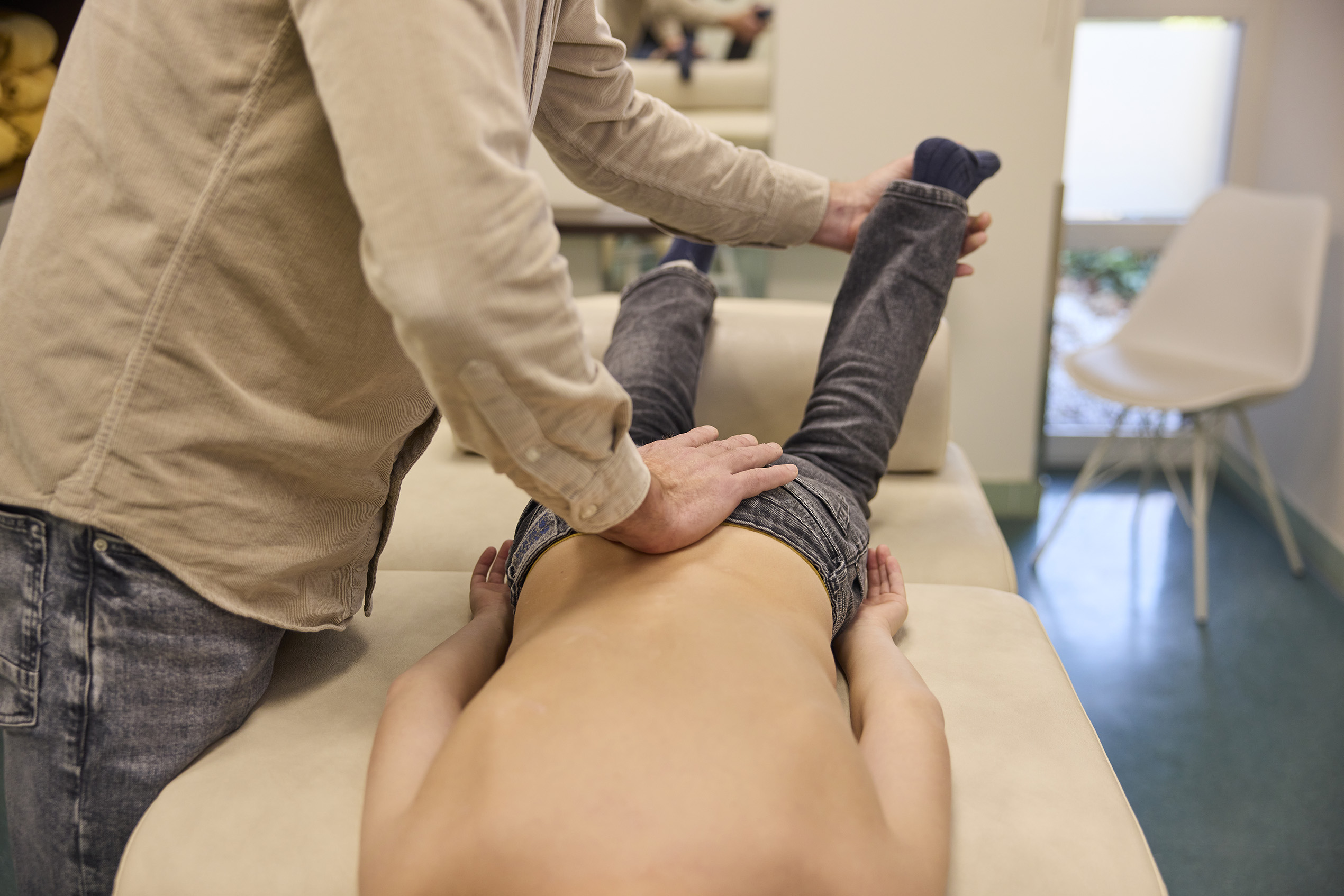
From an osteopathic perspective, we view the body as a whole. Ankle complaints, therefore, do not always have to be caused by a problem in the ankle itself.
Limited mobility of the foot, knee, hip, pelvis, or back can affect the load on the ankle joint. This sometimes results in pain in a different location than where the actual cause is located.
This is precisely why we always examine the interconnectedness within the body.